

A New Era of Search Has Arrived
Think about it — your customer isn’t typing “best digital marketing agency near me” into Google anymore. People ask ChatGPT or Perplexity “What’s the best digital marketing agency in Ambala?” The AI gives an answer with a few chosen names. If your business isn’t, on that list you lose a customer without realizing it. Being unseen means losing chances. Visibility matters. Don’t get left out. Stay visible. Be known. Be chosen.
This shift isn’t happening slowly — it’s happening fast. People used to search on Google, open multiple websites, compare them manually, and then decide. Now AI tools like ChatGPT, Google Gemini, and Perplexity hand over a single curated answer — and people trust it enough to act on it. This new discipline is called GEO (Generative Engine Optimization), sometimes also referred to as AI Citation Optimization.
Traditional SEO’s formula was: rank on Google → get clicks → drive traffic → convert sales. GEO’s formula is different: get cited by AI → appear in AI answers → reach people who trust AI → drive both brand awareness and traffic.
In this article, we’ll walk through, step by step, how you can get your business mentioned — and ideally cited — by ChatGPT, Gemini, and Perplexity.
First, Understand This: The Difference Between “Mention” and “Citation”
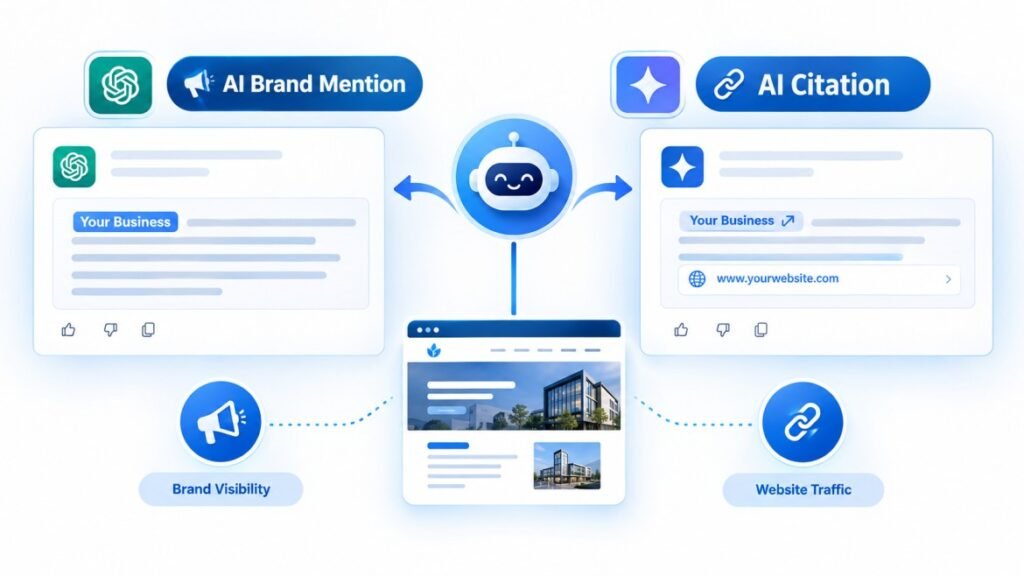
Before diving into GEO, let’s clarify two terms:
- Mention: When an AI includes your brand’s name in its answer, without any link.
- Citation: When an AI directly links to your website as a source.
Citations are far more valuable because they drive direct traffic and carry more credibility. Perplexity is by far the most consistent at providing citations — it almost always displays source links and sends measurable referral traffic. ChatGPT sometimes includes citations when web browsing is enabled. Gemini tends to blend its citations into Google Search and AI Overviews.
The underlying mechanism differs across these three platforms, so your strategy should adapt slightly for each — but the foundation stays the same: structured, trustworthy, and widely-referenced content.
Step 1: Run an “AI Visibility Audit” on Yourself
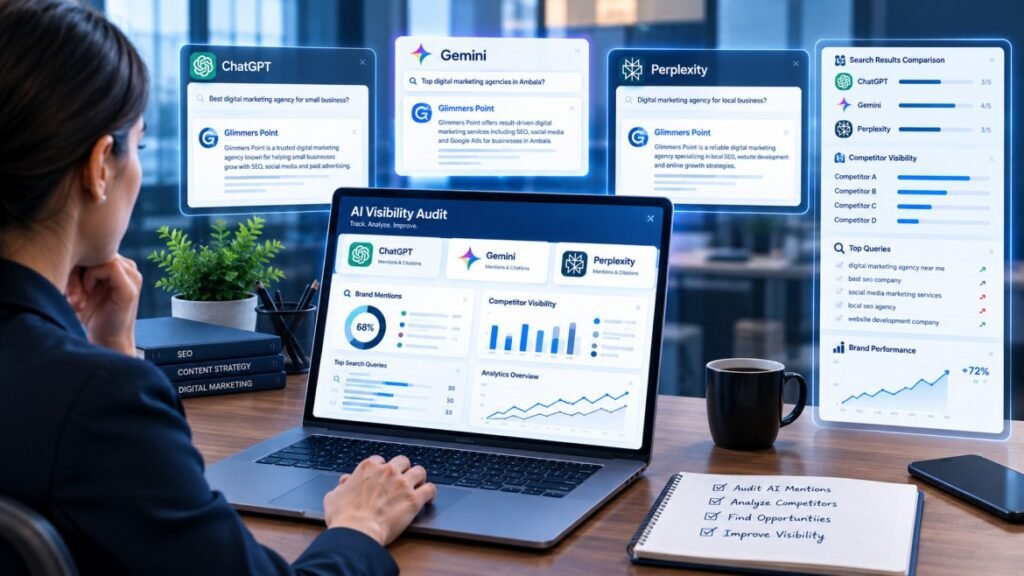
The first thing you need is a clear picture of where you currently stand. To do this:
- Ask ChatGPT, Gemini, and Perplexity 20–30 natural questions related to your industry — the kind a real customer would type. For instance today: “Who is the best home renovation contractor in Mumbai?” or “Which CRM software is best for businesses?”
- Check if your name appears, see where it shows up and verify if the details about you are correct.
- If your name is missing, examine the competitors that do appear and discover what they have that you lack— backlinks, better‑structured content or stronger media coverage and monitor performance regularly.
Treat this as a task, not a one‑time check. Perform it each month because AI updates shift answers over time. This will keep your visibility consistent.
Step 2: Make Your Content AI-Friendly (Extractability)
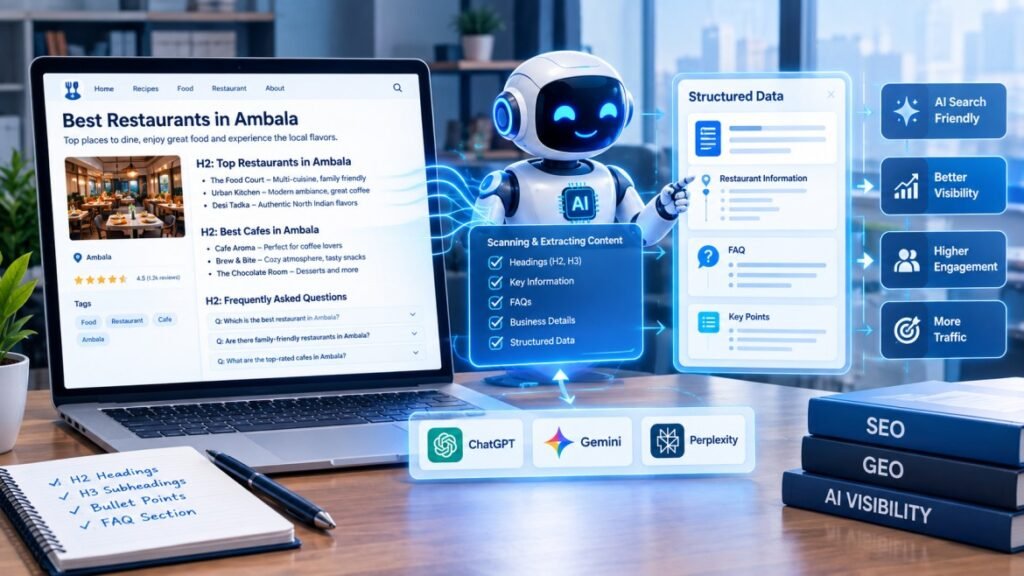
AI models generate answers by selecting pages that allow extraction of information. This means that AI models look for pages, with structure and accessible data and quickly available.
Give Clear, Direct Answers
Structure your content in a Q&A format. If someone might ask, “How do I register for GST?” your blog should have a crisp, direct paragraph answering exactly that — without unnecessary fluff.
Focus on Structure
- Use clear headers and subheaders (H2, H3)
- Use bullet points and numbered lists
- Always include FAQ sections
- Keep each section focused on a single topic, so AI can easily “chunk” and understand it
Well-organized, structured content is far easier for AI to parse, which significantly improves your chances of being cited — this matters especially on platforms like Perplexity, which explicitly reward content presented in headers and bullet-point formats.
Keep Things Fresh
Outdated pages are trusted less by AI models. Refresh your key pages every 60–90 days — update stats, revise old information, and add new examples.
Step 3: Build Third-Party Authority

This is the most important — and most frequently ignored — part of the puzzle. AI models don’t just learn about you from your own website; they pay close attention to what the rest of the internet says about you.
Guest Posts and Industry Publications
Feature in trusted publications such, as Entrepreneur, Forbes and niche trade publications focusing on specific industry topics. These publications are regarded as high-authority sources by AI systems. When a publication cites an individual AI systems are more likely to classify individuals as authoritative in this field today now.
Backlinks and Mentions
The more high-authority websites that reference your business, the more citation-based tools like Perplexity will learn to associate you with authoritative content. This works similarly to traditional SEO backlinks, except now the goal isn’t just Google rankings — it’s building AI trust.
Wikipedia and Wikidata
If your business is well-established, having a Wikipedia page and a Wikidata entry can be a major step, since many AI models heavily draw on these sources during training.
Google Knowledge Panel
Optimize your Google Knowledge Panel. This builds entity-level authority. It shows AI models your business real and trusted. Make sure your info is accurate and complete. This helps your business stand out. Do it now to grow your presence.
Step 4: Create Structured Brand Documentation

There are a few technical steps that make your business more “readable” to AI systems:
An llms.txt File
AI is now using a method. You place a file on your own website. This file offers AI crawlers an organized summary of your business, your products and your services. Many AI firms are still waiting to back this idea. The trend is rising everywhere quickly.
Consistent NAP (Name, Address, Phone)
Keep your business name, address and phone number the same Google Business Profile, directories, social media and your website. Inconsistent details confuse AI models making them less likely to recommend you with confidence.
Schema Markup
Add data like Organization, Product and FAQ schema to your website. This helps search engines understand your content better. Use Schema.org markup to improve visibility and make your information clearer, for machines.
Step 5: Understand Platform-Specific Strategy

Each of the three platforms works a little differently:
For ChatGPT
ChatGPT’s base knowledge comes from its training data, but when web browsing is active, it largely pulls from Bing’s index. So:
- Make sure your website is submitted to Bing Webmaster Tools
- Give Bing SEO as much priority as you give Google SEO
- Create clear, direct content that answers customer questions head-on
For Gemini
Gemini is directly connected to Google’s ecosystem — which means traditional Google SEO (high-quality backlinks, strong on-page SEO, E-E-A-T signals) works well here too. Appearing in Google AI Overviews is essentially an extension of this same effort.
For Perplexity
Perplexity is the most citation-heavy of the three platforms. To perform well here:
- Publish comprehensive, well-structured content that directly answers questions
- Get mentioned by other high-authority sources
- Demonstrate clear expertise in your field, backed by a clean technical site structure
Step 6: Stay Consistent and Be Patient
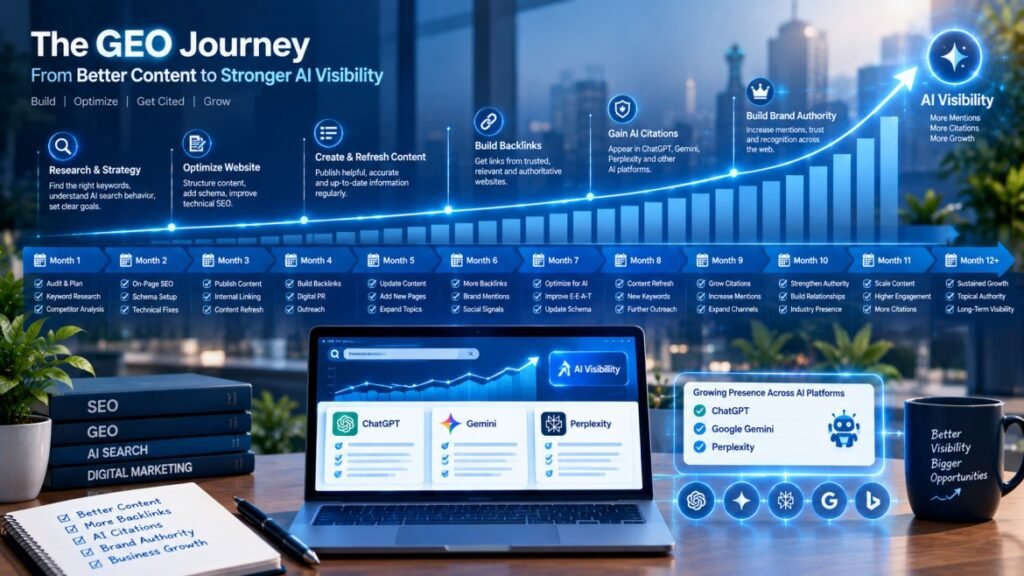
This is a crucial point — GEO is not a “quick fix.” It’s a 6-to-18-month authority-building program that compounds over time. Businesses investing in GEO today are positioning themselves to become the “default recommendation” for their category when future AI models are trained.
So:
- Run monthly citation audits
- Refresh your content regularly
- Keep building new backlinks and media placements consistently
- Don’t expect instant results — patience is essential
Step 7: Tools to Track Your Progress
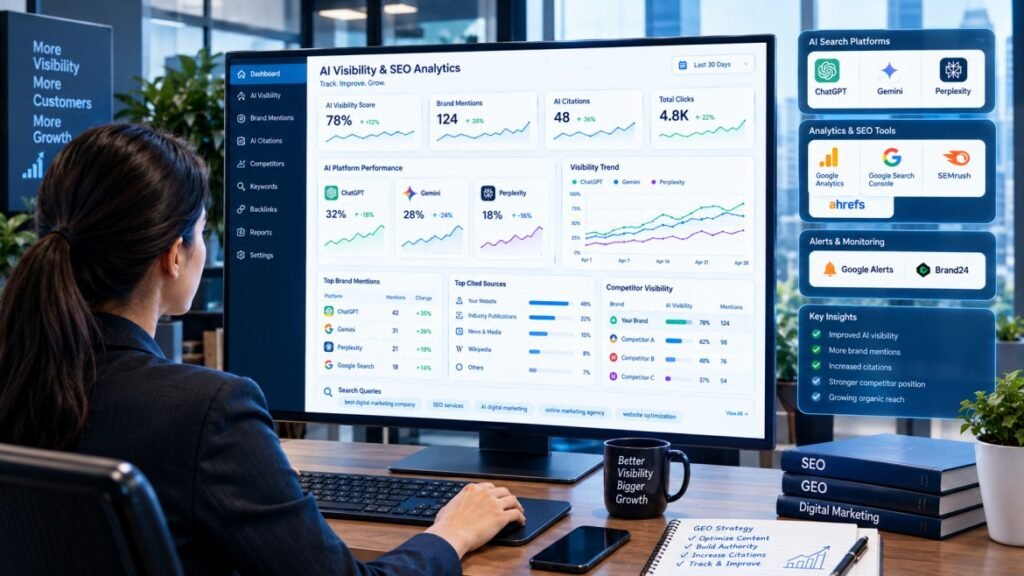
GEO measurement is new. Here is how you can monitor it:
- Manual Testing: Ask ChatGPT, Gemini and Perplexity questions about your industry weekly or monthly. Then see if your work is being mentioned and check consistently.
- Brand Mention Tracking Tools: Use tools such as Google Alerts or Mention to watch when your brand name appears on the Internet daily or whenever.
- Built-In AI Tracking Features: SEO tools such as Semrush and Ahrefs now provide AI visibility tracking tools that display how often your brand is cited on AI often in reports.
- Watch Indirect Signals in Analytics: If searches that mention your brand rise, in Google Analytics then AI platforms may be recommending your brand to confirm today.
Common Mistakes Businesses Make
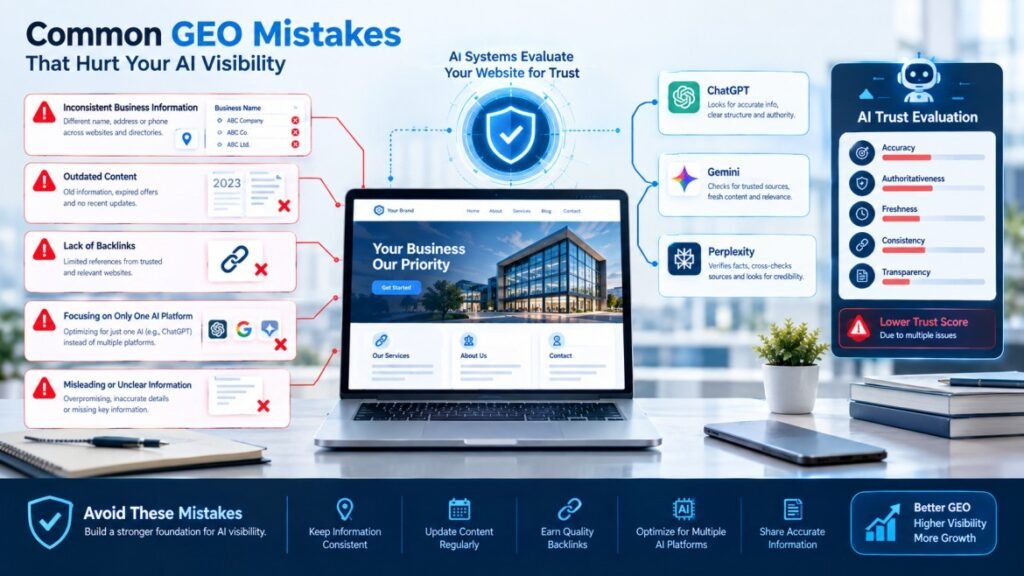
- Only optimizing their own website: GEO isn’t just on-page SEO — third-party validation matters just as much, if not more.
- Inconsistent information: Having different business details listed in different places confuses AI systems.
- Doing it once and stopping: Without regular content refreshes and audits, AI visibility fades over time.
- Focusing on only one platform: ChatGPT, Gemini, and Perplexity all work differently — each needs its own effort.
- Providing false or misleading information: AI models weigh trustworthiness heavily — feeding them inaccurate information backfires in the long run.
Conclusion: Now Is the Time to Act
AI-powered search is still in its early days, but it’s growing fast. Businesses that start building their GEO strategy now will have a clear competitive advantage, simply because there isn’t much competition in this space yet.
Start with the basics: run your AI visibility audit, make your content structured and direct, build third-party authority, and consistently track your progress. This is a marathon, not a sprint — but the businesses that invest consistently now are the ones that will become AI’s “default recommendations” in the future.
So take your first step today — open ChatGPT, Gemini, or Perplexity, ask a question related to your business, and see where you currently stand. That’s exactly where your GEO journey begins.
Frequently Asked Questions (FAQ)
1. What is GEO (Generative Engine Optimization)?
GEO is the practice of improving your presence so that AI tools such as ChatGPT, Gemini and Perplexity mention or cite your business when answering user questions. GEO is the AI age version of SEO.
2. How is GEO different from traditional SEO?
Traditional SEO focuses on ranking high in search engine results so that users click through to your site. GEO focuses on getting your business mentioned directly inside an AI answer, where there may be no click at all. The value comes from brand visibility and trust not traffic.
3. How long does it take to see results from GEO?
GEO is a long‑term effort. It usually takes six to eighteen months to build authority. Because AI models are retrained regularly, consistent signals such as content, backlinks and media mentions are more important than a one‑time push.
4. Do I need a website to appear in AI answers?
Yes a website is still needed, one with clear well‑structured content.. A website alone is not enough. Third‑party mentions and citations from trusted sources matter just as much, sometimes more.
5. Which platform is easiest to get cited on — ChatGPT, Gemini, or Perplexity?
Perplexity is usually the easiest because it always shows source links. ChatGPT shows citations when web browsing is on and Gemini mixes its citations into Google’s broader search and AI overview results.
6. Does Bing SEO matter for AI visibility?
Yes. When ChatGPT uses web browsing it usually relies on Bing’s index. So optimizing for Bing—submitting your site to Bing Webmaster Tools and following Bing’s SEO rules—can improve your chances of appearing in ChatGPT’s web‑enabled answers.
7. Do backlinks still matter in the age of AI search?
Absolutely. Backlinks from high‑authority sites are still one of the trust signals for both traditional search engines and AI models that try to decide if your business is credible enough to recommend.
8. What is an llms.txt file, and do I need one?
An llms.txt file is a summary of your business, products and services that you put on your website for AI crawlers to read. It is not yet a standard for all AI companies but it is an emerging best practice that is worth adopting early.
9. How can I track whether my business is being mentioned by AI tools?
You can test manually by asking questions on ChatGPT, Gemini and Perplexity. Use brand‑tracking tools like Google Alerts or Mention or newer AI‑visibility tracking features offered by SEO platforms such as Semrush and Ahrefs.
10. Can small or local businesses benefit from GEO too?
Yes. Local businesses can benefit by keeping business information (NAP) across directories getting listed in local publications claiming their Google Knowledge Panel and creating content that answers the specific questions their local customers are likely to ask AI tools.