

Hashtags are evolving rapidly on Instagram. Hashtags aren’t necessarily simply a list of 30 random hashtags under a post in 2026. Instagram’s AI and search technology has gained a deeper understanding of captions, Reel text, engagement, watch time, and audience behavior than ever before. The platform has revolutionized the way it makes content available, and hashtags have followed suit.
Right now, hashtags are primarily used to organize your posts and display them to the appropriate audience. With careful implementation, they can continue to make an impact on reach, engagement, profile visits, and organic growth. The word to remember is strategically: Using them the wrong way in 2026 can actually work against you, not for you.
This handy Instagram hashtag guide 2026 will help you understand the Instagram hashtag system in 2026, what’s new in the past few years, and how you can leverage hashtags to enhance your Instagram visibility and sustainable growth.
What are Instagram hashtags?
Instagram hashtags are words or phrases preceded by a hash symbol “#” that users can search or browse to find content. Common examples include:
- #InstagramMarketing
- #TravelReels
- #FitnessTips.
Functionally, hashtags allow Instagram to better comprehend your posts, their relevance to a specific audience, and where it fits into search results and the Explore tab. They’re not only discovering tools, as they used to be, but are a vital component of Instagram SEO, along with captions and content signals, helping to dictate where and how your posts are shared on Instagram in 2026.
Types of Instagram hashtags
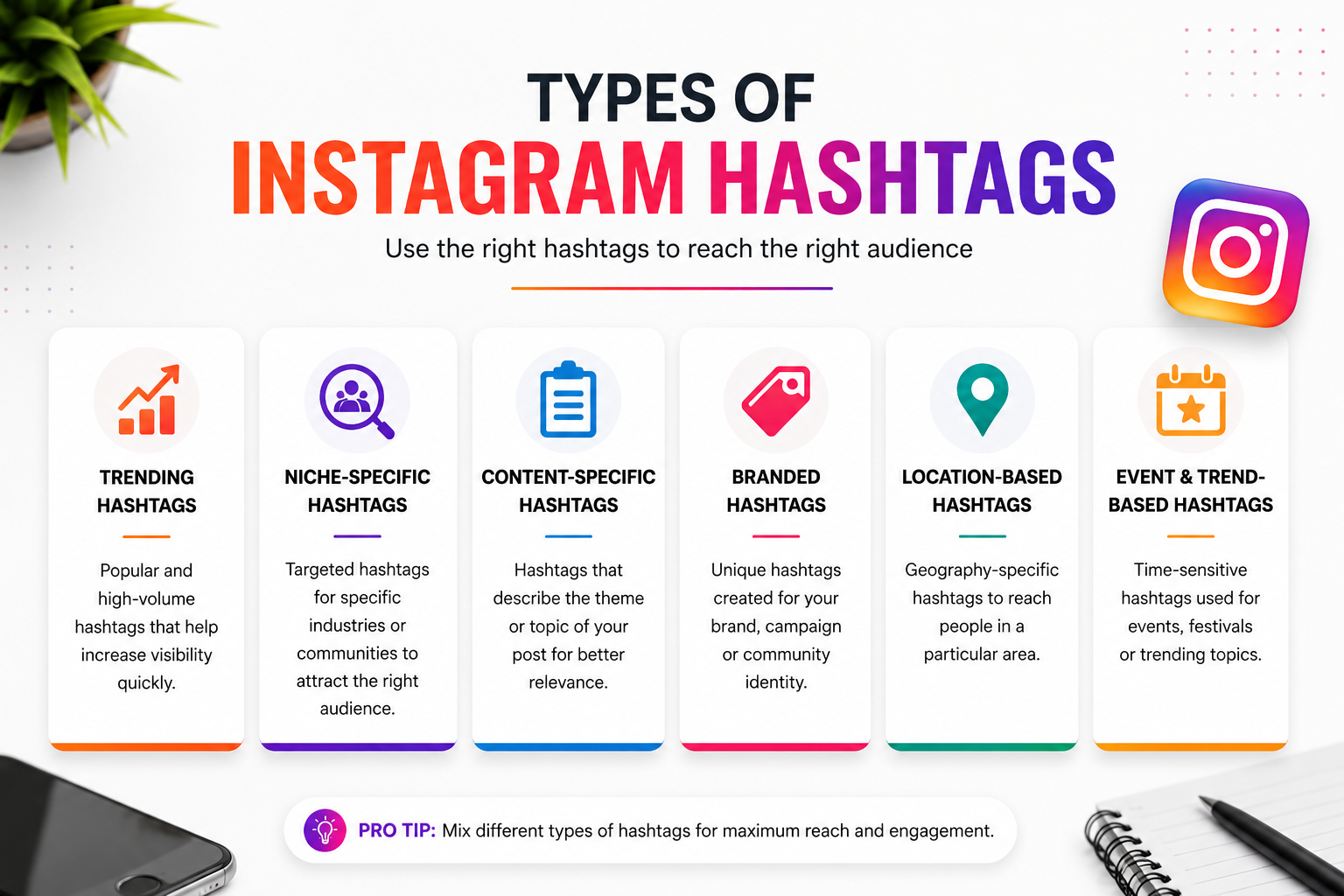
One of the biggest changes in Instagram strategy in recent years is the adoption and use of various hashtag categories in combination, since using a single hashtag category will significantly restrict your reach and targeting potential.
Trending Hashtags
The Trending Hashtags are the most popular hashtags related to trending topics and live discussions on the platform. Examples of these tags are #viralreels and #trendingnow. They can help boost the visibility of your content at the right time, but best used in conjunction with other hashtag types, not in isolation. Content-Specific Hashtags provide a clear description of your content topic and enable Instagram’s algorithm to better comprehend the precise subject of your post. The hashtags, such as #SocialMediaTips and #PhotographyIdeas, help Instagram better categorize your posts and find someone who is looking for them.
Niche-Specific Hashtags
Niche-Specific Hashtags are hashtags that attract smaller but more relevant audiences that are interested in a particular niche of your topic. Other hashtags, such as #DigitalMarketingAgency or #FitnessCoach, might not be as popular as the trending hashtags, but they tend to generate higher levels of engagement because the users who follow them are already interested in the products or services you’re promoting.
Content-Specific Hashtags
Content-Specific Hashtags provide a clear description of your content topic and enable Instagram’s algorithm to better comprehend the precise subject of your post. The hashtags, such as #SocialMediaTips and #PhotographyIdeas, help Instagram better categorize your posts and find someone who is looking for them.
Branded Hashtags
Branded Hashtags are unique hashtags that are designed for a specific business or campaign. At Glimmers Point, tags such as #GlimmersPoint and #GrowWithGlimmersPoint do this: They create brand recognition; they help track how the campaign is doing; they encourage audiences to be part of the brand story by using the same hashtag in their content.
Location-Based Hashtags
Location-Based Hashtags help to direct local audiences, especially for local agencies, service businesses, and local companies. Content is now geotagged and linked directly to consumers in a particular geographic location, who are much more likely to become real customers due to their local intent.
Event and Trend-Based Hashtags
Trends, festivals, or live events can kick off an Event and Trend-Based Hashtag, which can get huge attention during a trend. Hashtags such as #IPL2026 and #BlackFridayDeals can greatly increase the visibility for a short period of time, but only if the content is relevant and clearly related to the event; otherwise, Instagram’s algorithm is clearly against forced relevance.
Most Searches on Instagram hashtags
In 2026, some hashtags are still very popular to search for on the platform, such as:
- #beautiful (661.0M)
- #marketing (69M)
- #fashion (812.7M)
- #business (101M)
- #fitness (395.8M)
- #travel (497.3M)
- #photography (583.1M)
What these numbers can tell you is that these hashtags are huge and have a huge number of competitors. For most creators and businesses, smaller niche hashtags will work much better for organic growth than broad hashtags – they bring traffic to you from an interested and focused group of users instead of a huge stream of traffic all going in different directions.
Why are Instagram hashtags so important?
Instagram hashtags are not going anywhere, even with all the changes in the algorithm, as they are a useful tool for improving discoverability when used correctly. They provide improved reach as they get your content in front of people who don’t follow you. They allow you to target your audience with accuracy by providing Instagram with a clear indication of who the content is aimed at. They enhance Instagram SEO by helping to index your content along with captions and keywords. Over time, they create brand awareness, particularly when branded and niche hashtags are employed. They also facilitate the expansion of a community by enabling you to meet people who share your interests, values, and/or work areas.
How to use Instagram hashtags for marketing or promoting your post?
In 2026, the focus on hashtag strategy is on relevance, not on the numbers. The most important practices are:

Use Relevant Hashtags
Instagram’s algorithm is clever enough to identify irrelevant tagging and penalizes the content that seems to be gaming the system with irrelevant tags.
Combine Niche + Trending Tags
These hashtags combined will allow you to have the best of both worlds: niche tags and trendy tags. These hashtags combined will give you the best of both worlds – niche tags and trendy tags.
Optimize Your Caption
Instagram now actively uses captions for SEO signals, so the words you type around your hashtags directly impact how your content is classified and distributed.
Research Competitors
One of the quickest methods to discover what’s trending right this moment in your content category is to study hashtags used by people who are succeeding in it.
Track Performance
By monitoring the hashtags that are bringing in saves, profile visits, and valuable interactions, you can continually enhance your strategy and make informed decisions.
Here at Glimmers Point, we’ve always seen that specific hashtags and SEO-heavy captions outperform random hashtags that are going viral — and our client accounts have backed this up a thousand times over.
Things to be aware of while using the Instagram hashtags
If you’re aiming for your hashtag strategy to be effective in 2026, there are a few key habits you should avoid.
Avoid Irrelevant Hashtags
One of the worst things you can do is have the wrong hashtags as they can confuse Instagram’s algorithm and send your content to viewers who will have no interest in what you are posting, thus reducing your engagement rate.
Don’t Repeat the Same Hashtags
Another frequently occurring issue is using the same hashtag, location, or other details on multiple posts — this can be misleading for Instagram and cause the posts to lessen in effectiveness over time.
Avoid Hashtag Stuffing
Too many hashtags can make your posts look spammy to the algorithm and human readers, and they are no longer effective in reaching a larger audience.
Focus on Content Quality
It’s essential, and there are hashtags for everything you can think of.
Watch Time Matters
Instagram now factors in retention and true engagement as ranking criteria, so any video that will retain users will beat any post distributed by tags.
Limitations on Hashtag Usage on Instagram
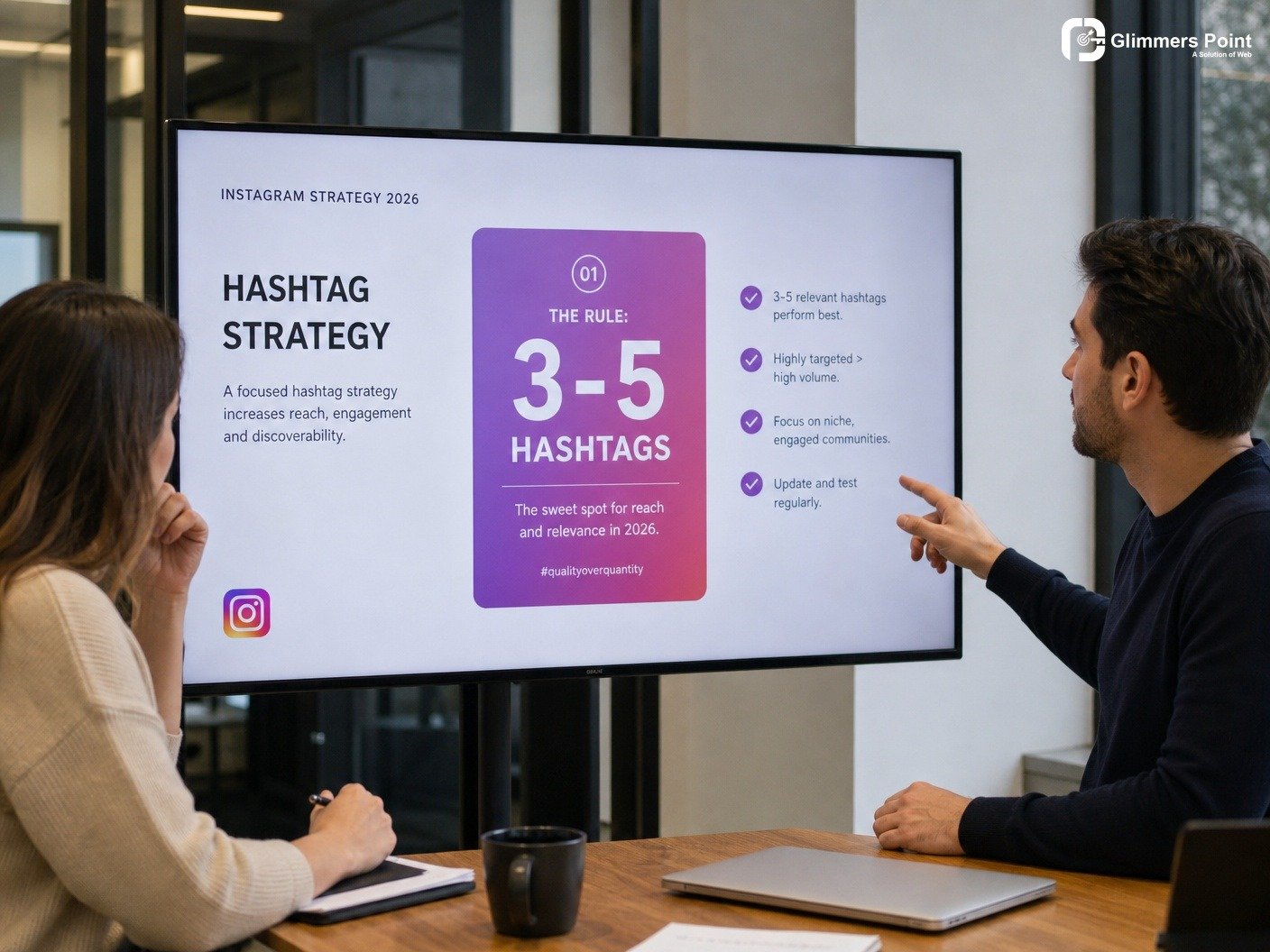
You’ll find Instagram hashtag rules drastically changed in 2026, and staying informed about the restrictions ensures you follow best practices and optimize your strategy. The platform now suggests using 3-5 hashtags that are highly relevant to the post as opposed to just filling up the space. While there is a limit of 30 hashtags, this could actually harm the quality signals and distribution of your post, so don’t go overboard. Using too many hashtags for too many posts can also cause spam alerts to be triggered, which are detrimental to reaching your audience. The message is clear from Instagram: less is more, and a smaller number of more meaningful hashtags always work better than a long string of mediocre.
What Has Changed in Instagram Hashtags in 2026?
Hashtags on Instagram are now much different from what they were several years ago. Instagram SEO has now completely gained importance, and captions and keywords have been included in the fields of distribution in addition to the hashtags. Instagram’s AI is now advanced enough to not just look at the hashtags but analyze the content of a caption, the text in a reel, audio, engagement patterns, etc., in order to understand the complete context of the content. The attention metric has become one of the biggest ranking factors, with good watch time ranking even more than the number of hashtags. And hashtag strategies that are focused have been found to perform better than those with many hashtags in essentially every content category, making the 30 hashtags method a thing of the past.
What is the Number of Hashtags to Use?
The number of hashes recommended for 2026 is simple.
- Feed Posts 3–5 hashtags
- Reels 3–5 targeted hashtags
- Stories 1–2 hashtags
Aside from the number, quality is far more important than quantity for all formats, and each hashtag you use should have a purpose or be relevant to your content.
The Secret Formula for Hashtag Success
The balanced hashtag strategy of 2026 is composed of four categories.
40% Niche Hashtags
About 40% of your hashtags should be niche-specific to reach your target audience with precision.
30% Content-Specific Hashtags
Approximately 30% of them should be hashtags, which are subject-specific and enhance the relevance and classification accuracy.
20% Trending Hashtags
Approximately 20% of the time should be on trending hashtags for additional coverage.
10% Branded Hashtags
The other 10% should be hashtags that will grow your brand over time.
The true formula for growth is more complicated than hashtags, though — it’s a mix of good content, hashtag-optimized captions, regular audience engagement, and strategically chosen hashtags in unison.
Mistakes to Avoid in Instagram Hashtags
- It’s not possible to rely on viral hashtags as they are very competitive, and most users will not be able to get any visibility.
- If you’re not optimizing your Instagram captions, this is a huge mistake because captions are now incredibly crucial to classify content.
- More than five hashtags will make a post look spammy, and the algorithm will take a hit.
- Irrelevant hashing leads to less targeting and content placed in the wrong audiences.
- If you repeat the same tags over and over, they will lose effectiveness over time because the algorithm will recognize them as repetitive actions.
Avoid Overused Industry Hashtags
Also, it’s a good idea not to use a lot of hashtags that are used by many people in the industry, such as #marketing or #business, as it’s very difficult to get a good ranking with them. Rather, alternative keywords such as #InstagramMarketingAgency, #SmallBusinessGrowth, and #DigitalMarketingTips help people find you better since the competition is not as high and the audience is highly targeted.
Use Location-Based Hashtags Strategically
One of the best strategies for businesses targeting specific geographic markets is to use location-based hashtags. Some of the most effective hashtags are #DelhiMarketingAgency, #IndiaStartups, and #MumbaiBusiness, which are ideal for targeting people in the immediate vicinity who are more likely to buy from your business.
Branded Hashtags
Consistent use of branded hashtags is important as it helps them to develop recognition and build a searchable archive of your brand’s content for the long run. Brands such as #GlimmersPoint and #GrowWithGlimmersPoint add a layer of brand identity, track campaign results, and help to engage customers in unique ways that generic hashtags cannot.
FAQs about Instagram
Q1. Do Instagram hashtags still work in 2026?
Yes, but now Instagram’s all about relevance, SEO, and quality of engagement.
Q2. What’s the ideal number of hashtags?
In 2026, there is an ideal limit of 3-5 relevant hashtags.
Q3. Does a hashtag boost the number of followers?
Yes. Niche hashtags can be useful for reaching out to the right people and potentially growing the organic audience.
Q4. Now, are captions more important than hashtags?
Yes. Captions and keywords are now an important part of Instagram SEO.
Q5. Are hashtags beneficial for Reels?
Yes, but watch time and engagement are more important.
Final Thoughts
Hashtags on Instagram are not dead in 2026; it’s the strategy that’s transformed. Relevance, Instagram SEO, niche targeting, content strength, and real audience engagement are now required to come together for success. Whether you’re looking for insights into the latest social media trends or developing a strategy that will support your brand’s growth in the digital age, we’re here to assist you at Glimmers Point.